
Conversion rate optimization is often reduced to a simple objective: increase the percentage of visitors who complete an action.
That definition is mathematically correct, but commercially incomplete.
A B2B company can increase its form-submission rate while generating more unqualified leads that never become pipeline. A direct-to-consumer brand can increase purchase volume with an aggressive discount while reducing average order value, margin and long-term customer value.
In both cases, the conversion rate went up. The business did not necessarily improve.
The real purpose of CRO is to create more business value from the demand a company already has. That requires the conversion strategy to reflect how customers actually buy, what creates or reduces confidence and which outcomes produce profitable growth.
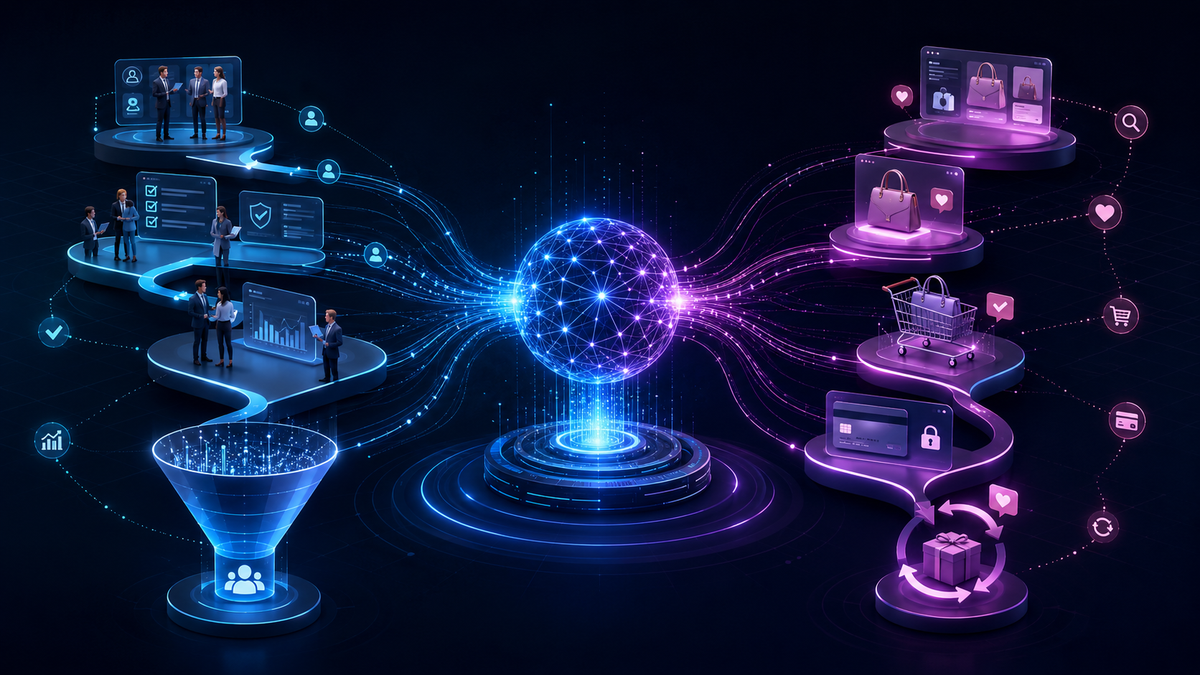
This is why B2B conversion rate optimization and D2C or ecommerce conversion optimization cannot rely on the same playbook.
They use many of the same analytical methods, but they apply those methods to different buying systems.
The same growth objective, but a different conversion system
B2B and D2C companies are both trying to reduce the distance between customer intent and a valuable commercial outcome. The differences begin with the nature of that outcome.
- Typical decision-maker. B2B: A buying group with multiple stakeholders D2C: An individual consumer or household
- Buying cycle. B2B: Often measured in days or months D2C: Often measured in minutes, hours or days
- Primary conversion. B2B: Qualified demo, consultation, trial, opportunity or pipeline D2C: Purchase, subscription or repeat order
- Main source of friction. B2B: Risk, unclear value, stakeholder alignment and implementation concerns D2C: Product fit, price, trust, shipping and checkout effort
- Typical traffic volume. B2B: Lower, with fewer final conversions D2C: Higher, with more transactional events
- Customer value. B2B: Higher contract value with a longer realization period D2C: Lower initial order value with potential repeat value
- Primary measurement system. B2B: Website analytics connected to CRM and revenue stages D2C: Website analytics connected to commerce, margin and retention
- Experimentation model. B2B: Evidence-rich testing that accounts for lower volume and longer latency D2C: Higher-volume testing with faster transactional feedback
The distinction can be summarized in one sentence:
B2B CRO optimizes qualification and progression. D2C CRO optimizes product confidence and transaction efficiency.
That does not mean B2B should add friction or D2C should remove every possible step. It means every element should be judged by whether it helps the right customer make the next valuable decision.
What counts as a conversion in B2B?
For most B2B companies, a website conversion is not the final sale. It is a transition into another part of the buying process.
Primary B2B conversions may include:
- Requesting a demo
- Booking a consultation
- Starting a product trial
- Completing an assessment
- Contacting sales
- Registering for a high-intent event
- Becoming a qualified opportunity
Supporting actions can also reveal meaningful intent:
- Viewing pricing or packaging information
- Reading an implementation guide
- Comparing vendors
- Reviewing a relevant case study
- Returning to the site from the same target account
- Sharing security or technical documentation
- Engaging with multiple solution pages
These micro-conversions are useful diagnostic signals, but they are not interchangeable with pipeline. A visitor can click a call to action without becoming a qualified buyer.
This is the central measurement problem in B2B CRO. If the team optimizes only for form submissions, it may reward changes that create more sales noise.
A stronger B2B scorecard connects the website action to downstream outcomes:
- Form start and completion rate
- Demo booking and meeting-held rate
- Lead acceptance and disqualification rate
- MQL-to-SQL or SAO progression
- Opportunity creation rate
- Cost per qualified opportunity
- Pipeline value per eligible visitor
- Closed-won revenue by source, page or campaign
- Time required to move between lifecycle stages
The objective is not the highest possible lead volume. It is more qualified pipeline from the right demand.
The B2B CRO tactics we prioritize
1. Match the experience to buyer intent
A visitor searching for an educational definition is not making the same decision as a visitor comparing platforms or looking for pricing.
B2B conversion paths should reflect that difference. Early-stage visitors may need a clear explanation of the problem and a low-commitment next step. High-intent visitors may need implementation detail, proof and a direct route to sales.
Sending every visitor to the same generic product page compresses different needs into one experience. That usually creates unclear messaging and a call to action that is either too aggressive for early researchers or too vague for serious buyers.
We evaluate:
- Search, campaign and referral intent
- Landing-page message match
- Industry and use-case relevance
- Buyer stage
- Account or audience segment
- The next decision the page should enable
The goal is not maximum personalization. It is sufficient relevance to help a qualified buyer recognize that the offer fits the problem they are trying to solve.
2. Build for a buying group, not a single persona
Complex B2B decisions often involve different stakeholders with different definitions of value.
An executive may focus on financial impact and risk. An operational user may care about workflow improvement. A technical evaluator may need security, integration and implementation detail. Procurement may need pricing structure, terms and defensible vendor evidence.
One page does not need to treat every stakeholder equally, but the larger conversion system should make the required evidence easy to find and share.
Useful B2B conversion assets may include:
- Outcome-focused case studies
- ROI or cost-of-inaction evidence
- Implementation timelines
- Security and compliance information
- Integration documentation
- Competitive comparisons
- Role-specific use cases
- Customer proof placed near the claim it supports
In B2B, trust is not only emotional reassurance. It is evidence a buyer can carry into an internal conversation.
3. Create tiered conversion paths
"Request a demo" is appropriate for a qualified buyer who is ready to speak with sales. It is not the right next step for every visitor.
A tiered conversion system can include:
- Watch a product walkthrough
- Explore an interactive demo
- Read a relevant customer story
- Calculate potential impact
- Review technical documentation
- Start an assessment
- Speak with an expert
This gives buyers a way to continue progressing without forcing a premature sales interaction. It also creates more behavioral signals that can help the marketing and sales teams understand intent.
4. Optimize forms for both momentum and qualification
Every form field creates a tradeoff. Removing fields can reduce effort, but it can also remove information needed for routing, qualification or follow-up.
We review:
- Whether each field has a defined business use
- Field order and perceived effort
- Progressive profiling opportunities
- Error handling and mobile usability
- Scheduling friction after submission
- Consent language
- Confirmation and expectation setting
- CRM routing and lifecycle-stage logic
The right question is not "How short can we make the form?" It is "What is the least amount of information needed to create a useful next step for the buyer and the business?"
5. Connect website behavior to CRM outcomes
A B2B CRO program cannot be evaluated responsibly when the website and CRM tell separate stories.
The measurement system should connect acquisition source, landing-page behavior, form activity and relevant identifiers to agreed lifecycle stages. The exact implementation depends on the stack, consent model and available data, but the analytical objective remains consistent: determine which experiences generate business value after the initial conversion.
This is where conversion analysis becomes more useful than an isolated page report. The page result must be interpreted within the larger journey.
6. Match the validation method to the available sample
Many B2B websites do not have enough eligible traffic or final conversions to run frequent, conventional A/B tests.
That does not make CRO impossible. It changes the evidence model.
Depending on the decision, a B2B program may use:
- Controlled A/B testing
- Message testing
- Moderated or unmoderated usability research
- Customer and sales interviews
- Form and funnel analysis
- Sequential releases with predefined evaluation windows
- Micro-conversion movement
- Pipeline cohort analysis
- Direct repair of clear usability or measurement defects
Low traffic is a reason to be more disciplined about evidence, not a reason to manufacture statistical certainty.
What counts as a conversion in D2C?
For a D2C brand, the purchase is usually closer to the website experience. That creates a faster feedback loop and more opportunities to observe customer behavior.
Primary D2C conversions may include:
- Completing a first purchase
- Starting a subscription
- Purchasing a bundle
- Reordering a product
- Joining a paid membership or loyalty program
Supporting actions commonly include:
- Using search or category filters
- Viewing a product detail page
- Selecting a variant
- Reading reviews
- Completing a product quiz
- Adding an item to the cart
- Starting checkout
- Selecting a subscription option
- Joining email or SMS
Transactional data makes D2C performance easier to observe, but it does not make it simple to interpret.
A purchase can be unprofitable. A discount can shift purchases forward without creating incremental demand. A bundle can raise average order value while increasing returns. A checkout change can increase order volume from one channel while reducing subscription adoption.
The D2C scorecard therefore needs both primary metrics and financial guardrails:
- Product-view and engagement rate
- Add-to-cart rate
- Cart-to-checkout progression
- Checkout completion rate
- Purchase conversion rate
- Revenue per visitor
- Average order value
- Contribution margin
- Customer acquisition cost
- New versus returning customer performance
- Subscription retention or repeat-purchase rate
- Refund, return and cancellation rates
The objective is not simply more orders. It is more profitable customer value from the available demand.
The D2C CRO tactics we prioritize
1. Preserve the promise from acquisition to landing page
D2C conversion begins before the visitor reaches the site.
The audience, creative, offer and product promise in an advertisement establish an expectation. The landing page must continue that expectation without making the shopper reinterpret the offer.
We compare:
- Audience targeting
- Ad creative and copy
- Promotional language
- Landing-page headline
- Product shown
- Price and offer
- Social proof
- Call-to-action hierarchy
When the advertisement and destination experience tell different stories, the brand pays to create intent and then loses it after the click.
2. Make product discovery efficient
Shoppers cannot buy a product they cannot find, distinguish or understand.
Product discovery work may include:
- Navigation and collection architecture
- Category labels
- Search behavior and zero-result recovery
- Filters and sorting
- Best-seller merchandising
- Comparison tools
- Product finders and quizzes
- Mobile collection-page usability
The purpose is not to minimize clicks at all costs. It is to reduce unnecessary work between the shopper's need and a credible product match.
3. Turn the product page into a decision system
A product detail page should answer the questions that determine whether the product is right for this customer.
Those questions usually include:
- What is the product?
- Who is it for?
- What problem or desire does it address?
- Why is it different?
- How should it be used?
- What should the customer expect?
- When will it arrive?
- What happens if it is not a fit?
Depending on the product, we may evaluate:
- Product imagery and demonstrations
- Benefit and feature hierarchy
- User-generated content
- Reviews and review filtering
- Variant selection
- Price presentation
- Subscription framing
- Shipping and return clarity
- Guarantees
- FAQs
- Mobile purchase controls
The winning product page is not necessarily the longest or shortest. It is the one that delivers the evidence needed for the decision without burying the purchase path.
4. Test offers against unit economics
Offers are powerful because they can change both perceived value and urgency. They are also dangerous because a visible conversion lift can hide a financial loss.
Potential tests include:
- Percentage versus dollar discounts
- Free-shipping thresholds
- Starter bundles
- Quantity discounts
- Gifts with purchase
- Subscribe-and-save offers
- Guarantees
- Cross-sells and upsells
Each test should include guardrails such as average order value, margin, return rate, subscription retention or repeat purchase. A local conversion win should not be allowed to damage the business model.
5. Remove avoidable cart and checkout friction
Cart and checkout are high-value stages because the shopper has already expressed purchase intent.
Common areas of investigation include:
- Unexpected costs
- Delivery expectations
- Coupon-code distraction
- Account-creation requirements
- Form complexity
- Payment options
- Error messages
- Mobile input behavior
- Trust and return information
- Express checkout
The objective is a clear, predictable transaction, not a stripped-down experience that withholds information until the final step.
6. Treat post-purchase behavior as part of conversion
For many D2C brands, the first order does not create enough value to support the acquisition cost. Profitability depends on retention, replenishment, subscriptions or additional purchases.
The optimization system should therefore extend into:
- Order confirmation and expectation setting
- Product education
- Replenishment timing
- Subscription adoption
- Cross-sells
- Loyalty programs
- Email and SMS lifecycle flows
- Win-back programs
D2C CRO is incomplete when it stops at the thank-you page.
What B2B and D2C CRO still have in common
The tactics differ, but the underlying discipline is the same.
Both models need:
- A commercially meaningful outcome. The team must define what value it is trying to create before selecting a conversion metric.
- Trustworthy measurement. Event definitions, consent behavior, platform differences and data quality must be understood before analysis.
- Segmented evidence. Aggregate conversion rates can hide major differences by audience, channel, page, device, product or lifecycle stage.
- A clear explanation of friction. Funnel data shows where behavior changed. It does not prove why.
- Structured hypotheses. Each proposed change should name the audience, observed problem, evidence, expected mechanism, primary metric and guardrails.
- An appropriate validation method. A/B testing is one method, not the definition of CRO.
- A documented learning loop. Winning, losing and inconclusive results should improve the next decision.
This is the foundation of DataXGrowth's CRO and experimentation approach: diagnose the constraint, prioritize the work, execute the change and measure the business outcome.
How DataXGrowth AI supports both CRO models
Most companies do not lack data. They lack a reliable way to connect performance data with the business context needed to make a decision.
Analytics may show that conversion declined. The CRM may show that lead quality changed. An advertising platform may show a shift in audience or creative. Meeting notes may document a pricing decision. Project-management activity may reveal that a new page, promotion or tracking change launched during the same period.
Those signals are often reviewed separately, by different teams, on different timelines.
DataXGrowth AI is designed as the consulting-led marketing intelligence layer that connects those signals. It combines deterministic performance data with authorized qualitative and operational context, then helps DataXGrowth strategists identify what materially changed, why it may matter and what should be investigated or prioritized next.
It is not a self-serve CRO platform, and it does not autonomously change campaigns, websites or offers. The system supports detection, interpretation and prioritization. DataXGrowth specialists validate the evidence, assess commercial relevance and govern what moves into execution.
How the intelligence changes for B2B
In a B2B environment, the system may connect signals from:
- Website and landing-page behavior
- Campaign and search performance
- Form and demo activity
- CRM lifecycle stages
- Lead-quality and pipeline outcomes
- Sales feedback
- Meeting transcripts
- Campaign briefs
- Project updates
- Launches, pricing changes or operational blockers
This allows the analysis to move beyond "Demo conversion declined."
The more useful question is:
Did the decline come from lower-intent traffic, weaker page performance, a change in the offer, a form or scheduling issue, a tracking problem or a shift in who sales considers qualified?
DataXGrowth AI helps surface the relationships and supporting evidence. It does not convert correlation into proof. A strategist still determines which explanation is credible and what validation is required.
How the intelligence changes for D2C
In a D2C environment, the system may connect:
- Product and collection-page behavior
- Add-to-cart and checkout progression
- Order and revenue data
- Campaign, audience and creative performance
- Product and offer changes
- Device and page-speed signals
- Reviews, support themes and customer feedback
- Promotion calendars
- Inventory or fulfillment context
- Repeat-purchase and subscription behavior
This changes the question from "Purchase conversion declined" to:
Was the decline isolated to a product, device, audience, creative promise, checkout step, inventory condition or promotional period, and what happened to revenue and margin at the same time?
The system helps suppress low-value noise and rank the issues most likely to affect growth.
One intelligence loop, two business models
The shared operating loop is:
- Connect the relevant performance sources.
- Define the business model, KPIs, audiences and guardrails.
- Add authorized operational and customer context.
- Detect material changes and anomalies.
- Generate evidence-backed questions and recommendations.
- Apply expert review.
- Move approved actions into the appropriate workflow.
- Measure the result and add it to the cumulative learning system.
For B2B, the loop is oriented toward qualified progression and pipeline. For D2C, it is oriented toward transaction value, margin and retention.
The technology is shared. The commercial logic is not.
The same symptom can require two completely different solutions
Consider a product or solution page with a low primary conversion rate.
In a B2B company
The page may be underperforming because:
- The value proposition is too generic.
- The visitor is not ready to contact sales.
- Key stakeholders cannot find the evidence they need.
- Implementation or security risk is unresolved.
- Traffic includes low-intent researchers.
- The form or scheduling handoff is broken.
The correct response might be to improve differentiation, add role-specific proof, introduce a lower-commitment product experience, clarify implementation and connect the result to qualified pipeline.
In a D2C company
The page may be underperforming because:
- The product fit is unclear.
- Reviews do not address the shopper's objection.
- The advertising promise is inconsistent with the product page.
- Price, shipping or subscription terms are confusing.
- The mobile purchase control is difficult to use.
- The desired variant is unavailable.
The correct response might be to improve product education, align the page with the creative, surface customer proof, clarify the offer and repair mobile or checkout friction.
The surface-level metric is the same. The customer decision and the commercial solution are different.
A practical framework for choosing the right CRO strategy
Whether the company is B2B or D2C, a defensible CRO program can begin with eight questions:
- What business outcome are we trying to improve?
- Who is eligible to complete that outcome?
- How does that customer make the decision?
- Can we trust the measurement across the relevant systems?
- Where is progression or value being lost?
- What evidence explains the friction?
- Which change has the strongest combination of impact, confidence and feasibility?
- What primary and guardrail metrics will determine whether the change worked?
This prevents the experimentation backlog from becoming a collection of design opinions.
Frequently asked questions
Is CRO different for B2B and D2C companies?
Yes. B2B CRO usually optimizes qualified progression through a longer, multi-stakeholder buying process. D2C CRO usually optimizes product discovery, purchase completion and repeat customer value. Both use analytics, research and experimentation, but their conversion definitions, friction points and success metrics differ.
What is the most important B2B CRO metric?
There is no universal metric, but qualified pipeline or revenue per eligible visitor is usually more commercially useful than raw form-submission rate. The website conversion should be connected to lead quality and downstream CRM stages.
What is the most important D2C CRO metric?
Purchase conversion rate is important, but revenue per visitor provides a more complete view because it incorporates both conversion rate and order value. Margin, acquisition cost, returns and repeat purchase may also be necessary guardrails.
Can B2B and D2C companies use the same A/B testing tools?
They can use the same platforms, but they should not use the same experiment design or decision rules. B2B programs often have lower volume and longer revenue latency. D2C programs often have more transactional data but require tighter financial guardrails.
Can a low-traffic B2B website still use CRO?
Yes. CRO is broader than A/B testing. Low-traffic companies can use customer research, usability analysis, message testing, funnel diagnostics, sequential releases and predefined before-and-after measurement. The validation method should match the available sample and the risk of the decision.
How can AI improve conversion rate optimization?
AI can help organize fragmented data, detect material changes, connect quantitative performance with qualitative context and accelerate hypothesis development. It should not be treated as proof of causality or allowed to make ungoverned changes. Data quality, business context, expert review and controlled validation remain necessary.
Build the conversion system your business actually needs
B2B and D2C companies share the same high-level goal: create more value from existing demand.
They reach that goal through different customer decisions.
B2B CRO must help the right stakeholders build confidence, qualify the opportunity and advance toward revenue. D2C CRO must help an individual find the right product, understand its value, complete the purchase and return when the product creates ongoing value.
The strongest conversion programs do not copy a generic checklist. They connect acquisition, behavior, customer context, measurement and business economics into one learning system.
DataXGrowth combines human-led conversion strategy with DataXGrowth AI to help teams identify where growth is being lost, determine which evidence matters and prioritize the next action.
If your team has traffic but cannot clearly see where qualified pipeline or ecommerce revenue is leaking, request a DataXGrowth Growth Audit.